
How to Draw: Lesson #1
The Importance of the Page

Prologue
Drawing is the basis of Art.
By “Art” I mean painting. Because when people say "Art" the first thing most think of is still painting. Likewise when we hear the word “culture”, generally the first thought is “art”. So “culture”, first of all means “painting”, and drawing is the basis of painting. Drawing is also basic to sculpture, architecture, design of all types and etc, so drawing, I say, is the basis of Art.
Why does painting have such a particular place in the idea of Art?
Art, in its essence, is poetry. By “poetry” I do not mean rhymed verse but poetic reaction, poetic expression. To understand what, in this sense, “poetry” is, contrast it with some non-poetic feeling and expression. For example: the feeling which emanates from, the expression embodied in, say, international corporations like McDonalds, Nike or Tesla. The synthetic joy, the appeals to petty gestures of social status and crypto couch-potatoism or luxury ecological virtue signaling: the hypocritical hucksterism underneath it all is invisible only to unpoetic spirits for whom such suave or agitated nihilism fills an empty space poetry should occupy. Or the numbing drudgery of office work, the efforts required to pass entrance or diploma exams, the routine of food shopping, coping with the maintenance and bureaucracy of car ownership — there are infinite examples of activities which require time, effort and attention but are non-poetic.
Some things, however, must be poetic: an evening out with a lover on a restaurant terrace overlooking the sea; without some poetry, however superficial, this situation fails. But ‘Art’, with a capital ‘A’, involves a deeper and more surprising kind of poetry, the kind that turns the banal, even the ugly, into a wonderful dream, an inspiration, food for the soul.
Why does painting hold such a particular place in the vocabulary related to “art”? Why not music or dance, which invades us and carries us into the moment with living gesture? Why not sculpture whose poetic forms are actually three dimensional? Why not writing which invades our minds and souls with ideas in the captivating language of words? The reason is that painting, in one way or another, manages to do so many of these things: it is living gesture made eternal, three dimensional form (as illusion) and idea as (visual) example. Furthermore it does not invade us, nor does it, like reading, hold itself back: it neither tyrannizes our attention like music nor impose temporal impositions like reading. Rather it is always and instantly available, to the minds eye if not to the eye itself.
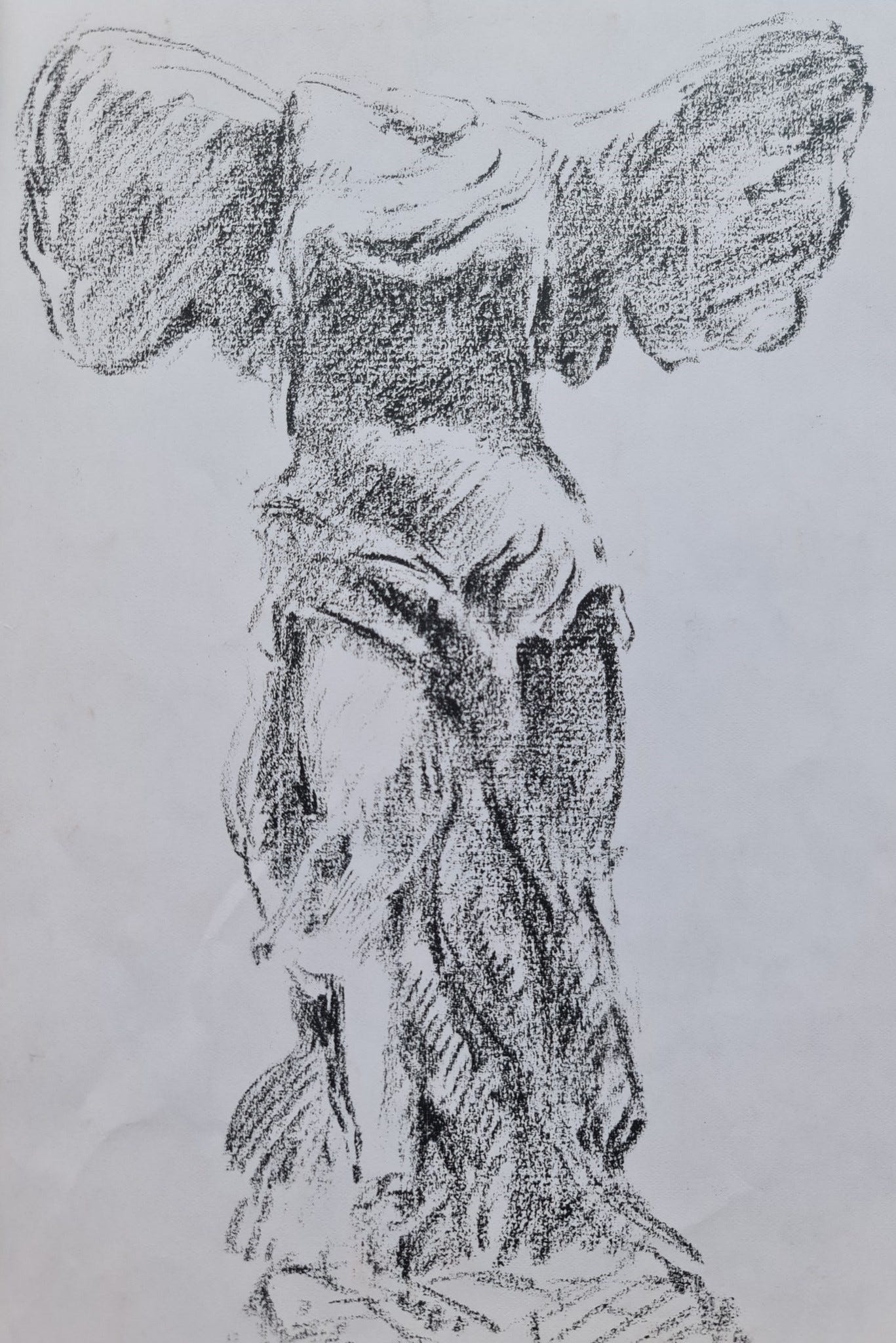
I do not mean to propose a hierarchy of the Arts with painting at the top. Each Art has its particular and necessary place in a world where different people have different powers and inclinations. Music appeals to the ears. Dance appeals to our frames. Reading appeals to our minds. Wine making and cooking appeal to nose and tongue. Sculpture and painting appeal to the eyes. But as humans we are all these things, and the arts associated with each are aspects of our life. The point is not hierarchy, or that the eyes and visual experience are somehow higher or more important; I am only trying to explain the peculiar relationship of painting to the words “Art” and “culture”.
Very well then, the art “painting” has some kind of special relation to “Art”. But painting is not anything, as the neo-dadist post-moderns pretend. It is a particular art. This art consists, as Poussin famously said, of “pictures of everything under the sun, made with lines and colors on a flat surface”.
The question for us today is: this art, which is the representation of everything under the sun — meaning anything we can “see”, including with the mind’s eye — with lines and colors on a surface, how is it practiced?
Or, we could come at this problem from another angle: why, despite all the painting going on today, despite all the representations of stuff (including “non objective” stuff we are nonetheless seeing) are some of us convinced painting is a lost art? Despite the representational or illusionist brio of the new realists, or the abstractionist and surrealist enthusiasms of post-modernist conservatives — I refer to persistence in attitudes and styles which arose from the progressivist enthusiasm of the 20th century and which since 1989 can clearly be seen for what they are (i.e. more or less sterile experiments) — why is it so clear we fall short of the old masters, from Giotto to Manet, from Duccio to Renoir? What are the missing ingredients, skills, perspectives, theories, practices or materials? What is it we no longer know?
After a lifetime wrestling with this question from both practical and theoretical angles, I pretend to understand it; so if the examples of my drawing which adorn, or disgrace, this essays do not suggest that my pretension might be justified, I cordially invite the reader to waste not a further instant on this exposé.
What follows is in the nature of a ‘how to’. How to paint? How, above all, to draw. Drawing was always considered the heart of a painters education. This idea persisted into the 20th century, as exemplified by Hans Hoffmann, himself a student of Matisse, who was the teacher of the abstract expressionists. Drawing is the essence of painting.
Herbert Katsman (1923-2004) once said to me that drawing was “about color”. It took me time to understand this, and doing so completed my understanding of why drawing is the essence of painting or, to put it another way, why drawing is already painting.
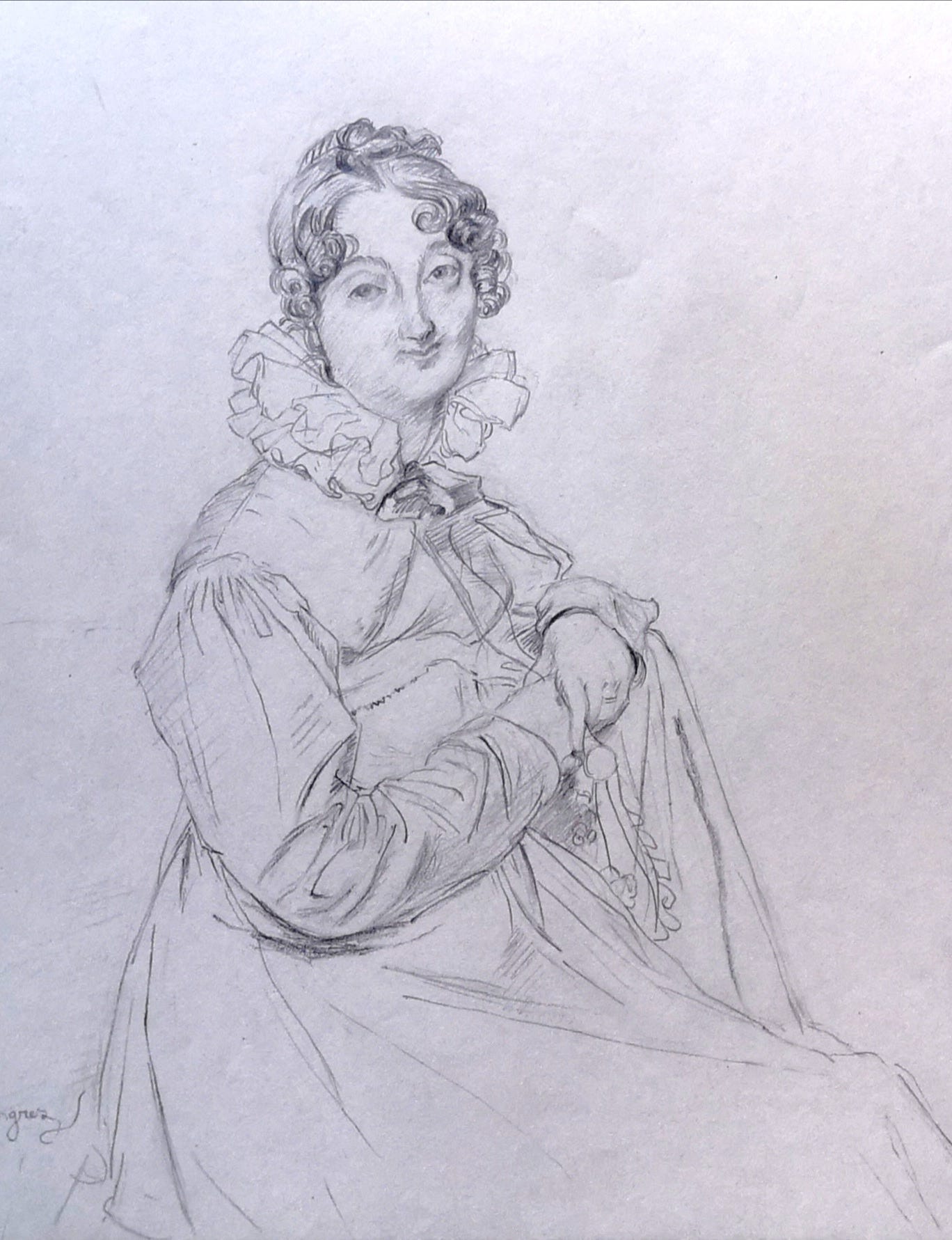
Some Remarks on Drawing
Drawing has the ingratiating quality of being as much an activity for children as a high art. In the same way; everybody can sing but some people are trained opera singers. The present state of society makes the following remark necessary: drawing, in the higher sense, that which we associate with the old masters, involves more than tracing lines or representing things more or less symbolically, or even, at a higher level, of convincing illusionism. It is not an art that can be practiced at anything approaching the level of the old masters without training by even the most exceptionally gifted. Raphael, Rembrandt, Watteau and Ingres, to mention only these four among the greatest draftsmen, all benefited from instruction; the history of their education and artistic development is even a matter of historical record. In what, during so many centuries, did drawing instruction consist which produced such painters?
To put it another way: in what is our present drawing instruction — to the extent it can be said to exist — lacking? This, as Leo Strauss would say, is ‘a long question’. I will here insist only on the single and most foundational aspect, without which even those crucial aspects which must follow cannot lead on to the sort of result we seek. What is this foundational aspect, so utterly unknown and neglected today, yet so evident and obvious in times past that barely any mention of it is made in the scant teaching literature which the old masters and their circles left to us?
When painting thrived in society, when poetic decoration, heroic commemoration, sentimental recollection, honorific memorial, were tasks calling for the painter’s skill, master painters trained helpers to keep pace with demand, and these apprentices became the masters of the following generation. Art education (painting training), then was not a matter of theoretical readings and graduated exercise in a program, but a practical business. Young talent was trained and exploited for and through the realization of actual masterpieces; masterpieces for which there was a flourishing market. The apprentice, to be worth the master’s time, had to quickly make himself useful, and the master had every motivation to assure this usefulness without delay.1 In other cases masters offered training to students who paid to learn the secrets of the craft.
Painting education, prior to its collapse, was informal and practical. The tricks of the trade were valuable knowledge the broadcast of which was not in the interest of those who lived by them. The absence of theoretical and methodical catalogues of principles and means is therefore not surprising.
Today the situation is dramatically different. More money chases what is fraudulently accepted and maintained as “art” than ever blessed the profession in the whole glorious period of its previous existence. Meanwhile anything that might without utter shame legitimately pretend to the designation is officially seen as irrelevant if not morally degenerate, and is excluded from this newfangled ‘economy’. The secrets of painting, therefore, are now as valueless as their result, so it is no economic sacrifice for me to teach these matters openly, as much as it is my duty to painting to do what I can to restore its existence by graciously helping young painters learn that without which their efforts are unlikely to surpass the amateurish levels to which the most assiduous efforts of recent generations have managed to rise.
Very well, enough rhetorical flourishes and side issues! What is this wonderful, foundational and secret information? But here again I hesitate, for there is a yet another reason which makes discussion of this matter problematic, even today . . . today more than ever! Previously painting was taught in a practical manner, by example in the context of actual work, because painting is a practical matter. Talk, theoretical considerations, may be interesting or even helpful in some ways but they cannot replace actual practice, actual putting down of lines and colors on a surface, a surface of particular qualities using paints of particular characteristics, to represent a particular subject in a particular context. So, I will now proceed to teach theory but I expect to only begin to be understood by actual practitioners butting up against the problems I will invoke, because my theoretical exposition can never replace a practical demonstration. Such a demonstration must go beyond the possibilities of video because the proper teacher-student interaction depends on the aptitude, level and needs of a particular student, as well as a moment to moment, gesture by gesture, supervision.
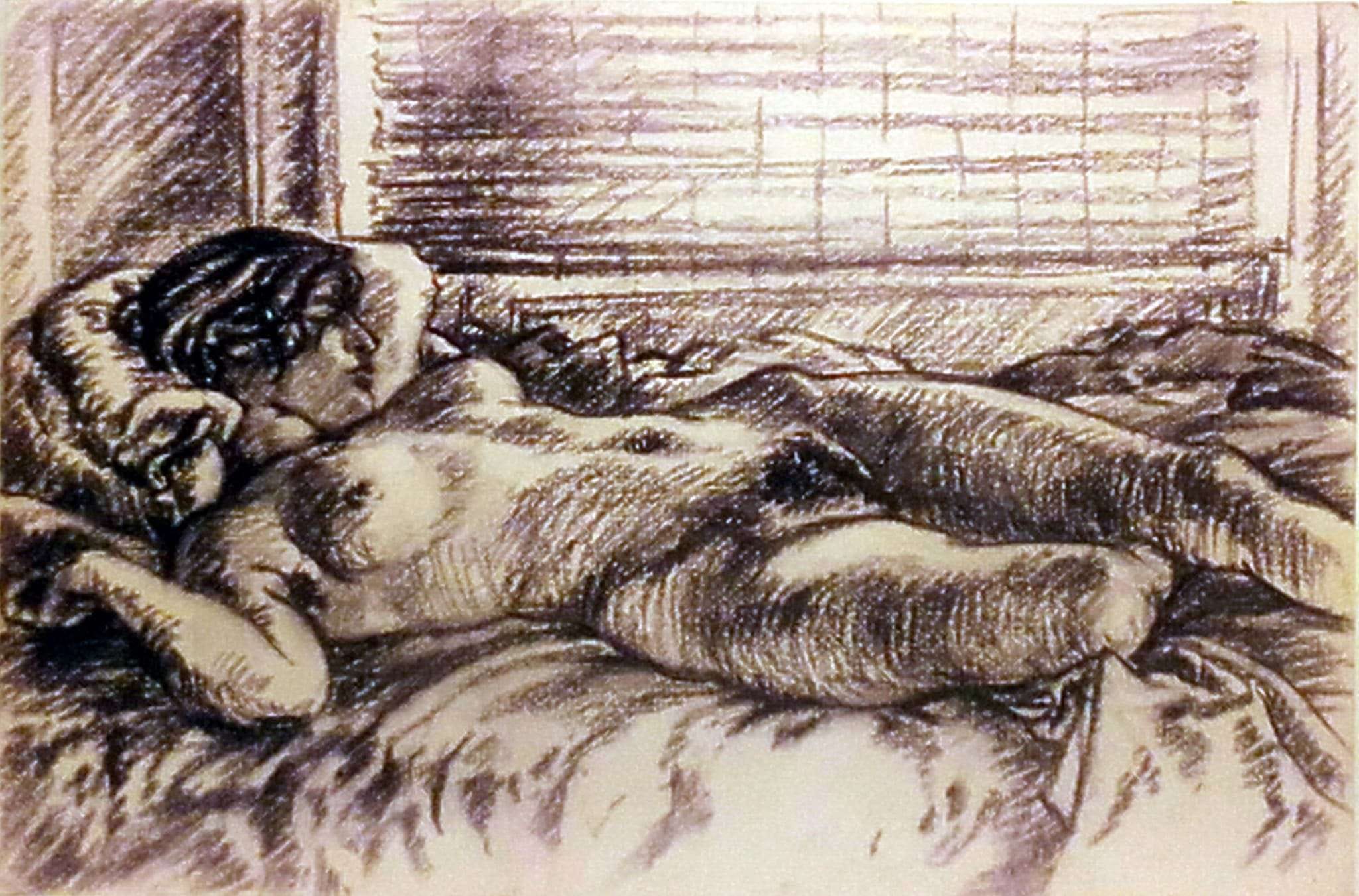
The First Principle
The missing element, the foundational block I wish to address, is concern with composition. I spent half a life time puzzling over the question ‘what is composition?’ Today I pretend to a certain understanding of this most basic of painting matters. I can say without peroration that it has nothing to do with “harmony and balance” or other such platitudes which have replaced the practical knowledge of the old masters. It has everything to do with ‘true painting’, theorized by the early modernists as Arthur Dow reports in his books. To state this most basic compositional principle as bluntly as possible, it is: ‘concern with the page’.
I’ll state this another way: when drawing a subject, figure or landscape, your first concern ought not to be that subject but the page on which you are going to draw it. A subject is not a target to be duplicated. It is not the most important thing. The page or canvas itself is the first object of the draftsman's or true painter's attention. A painting (thus a drawing) is a picture of anything under the sun made with lines and colors on a flat surface. It is "a picture". It is not a reproduction, a remaking of a thing; it is a thing made on a surface with lines and colors.
A drawing is a way of talking about something in a language, the language of drawing, which is properly a form of poetry, a mode of expression. Indeed, that a few lines, scrawled with apparent negligence, could ‘say’ so much; is this not magical? Given that I am, we might say, a low level magician initiated in the arcana of such enchantments, you would be well advised to take it from me that the expressive power of a few ‘negligent lines’ does not arise most directly from the lines themselves but, first of all, from the relation of those lines to the page. You would be well advised to believe and try to understand this though I doubt many will try even as I ponder ways to make this understanding more accessible.
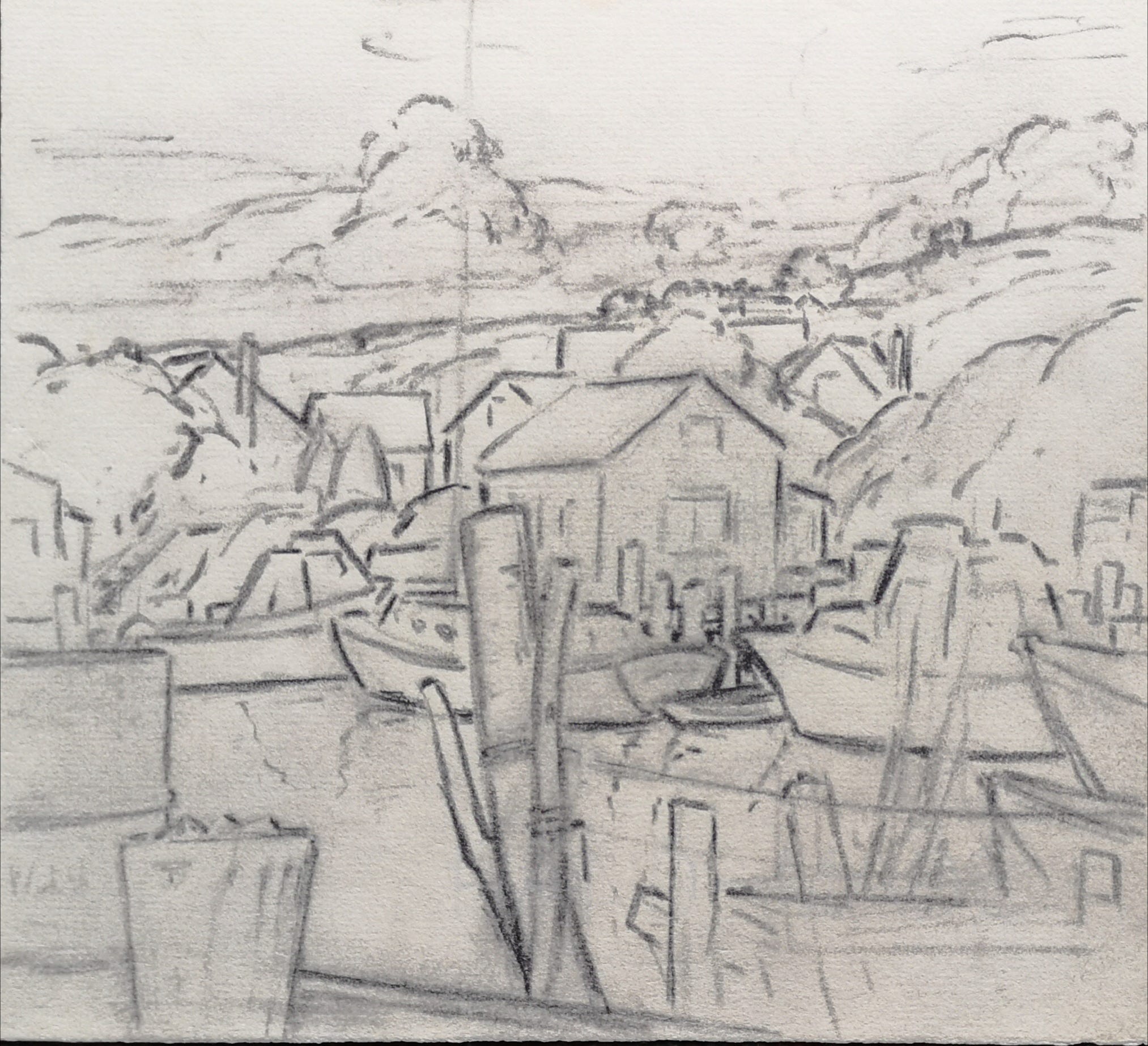
You might draw a portrait of your girl friend. She might then die. In any case, tanned and untanned, fatter and thinner, coiffed and uncoiffed, older and younger, dressed and undressed, she was always changing and after death she does not even exist. To put this another way, a drawing of a person says something about the person but is not the person. What is it? It is not a mechanical impression of light reflected off her, like a photograph. It is, very exactly and first of all: ‘a piece of paper with marks on it’. But which is more fundamental: the marks or the paper? Could the marks exist without the paper?
A drawing is a piece of paper with marks made upon it. It is a decorated piece of paper. The marks decorate the paper, not the contrary. The marks are embodied symbols. That embodiment is made possible by the ground, the support: the page. The language of drawing, to exploit this metaphor, is phrases realized as a modification of a page. A drawing is a modified page.
By page, however, it must be understood that I am not referring to a theoretical surface, a ‘ground’ of theoretically infinite extension, but to a specific piece of paper, or canvas, the most important characteristic of which is its extent, its concrete physicality. The page is an object the boundaries of which are, so to say, the rhythmic structure and rhyme pattern of the poem, the expression that will be our drawing.
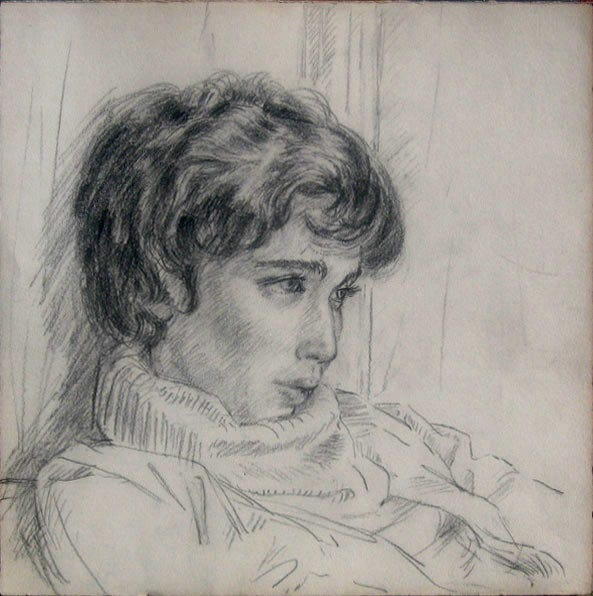
This understanding, I say, is the most fundamental understanding of composition, and therefore the most fundamental aspect of drawing and painting. But as unspoken, as hidden behind the secret praxis of the old masters as it may be, there exist even today indications of how it used to be discussed and overtly taught. If you go to art school in certain eastern European countries, certain academies set up in the 18th and 19th century, in imitation of the French academy, and despite the ravages of communism and post-communist oligarchic degeneracy, continue to teach some of the principles initially learned from their french masters.
The French school, let us recall, begins with the artists imported from Italy by François Ier to decorate Fontainebleau, notably Rosso and Primaticcio, themselves students of Michelangelo. This base was most significantly enriched by Poussin's enthusiasm for the “Roman school”; the approach to painting stemming from Raphael, and what might be called a Flemish or northern enrichment from Watteau (which is essentially a “venetian” influence, but such remarks require a long development). The remnants of the old teaching still extant in eastern Europe are, therefore, faint echoes of what used to be called The Great Tradition, which was an amalgam of the Roman and Venetian schools (or ‘designo’ and ‘colore’).
If you study life drawing in some of these east European or Russian schools you will be instructed to “fill the page” with the figure. So, while the figure must be properly proportioned in relation to itself, it must also be as big in the page as possible, or the page must be exploited fully. In such classes, no matter how well your figure is ‘drawn’, it will be unacceptable if it doesn't fill the page.
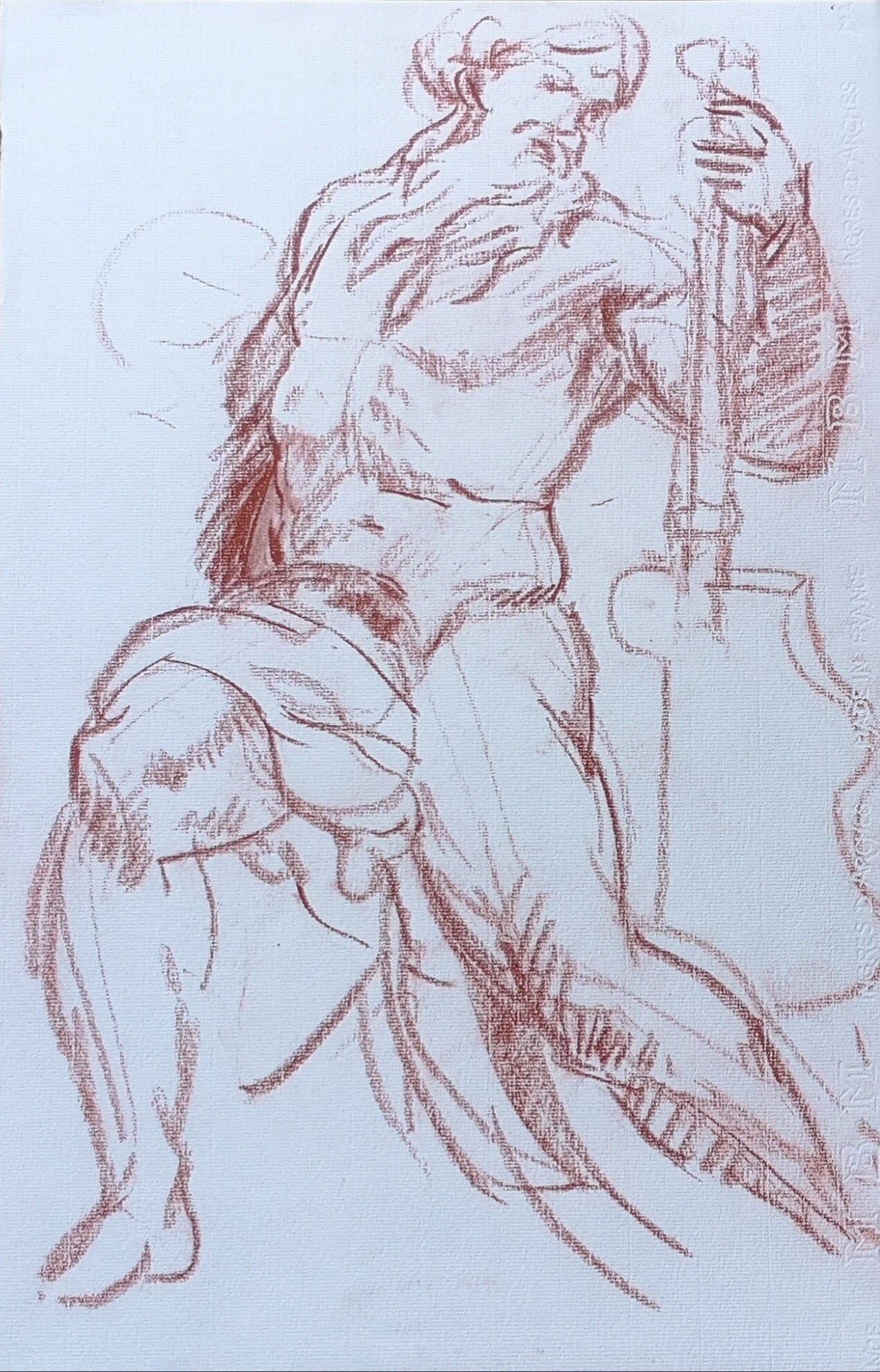
Let me emphasize this to make sure it is well understood: in such classes you can make the most beautiful rendering of a figure ever made in all human experience but, if it fails to correctly fill the page, the teacher will demand it be erased and redone with, as most important criteria, correct relation to the page. In the case of such life drawing exercises this means, very simply, being as large as possible in the page.
My own teacher, Aaron Kurzen, who had studied with Cameron Booth, who had himself studied in France after the first world war with André Lhote and Hans Hoffmann but also in ‘academic’ classes, insisted on this stricture in his life class, which I was privileged to spend years attending, and later even to teach in the role of assistant. I did not encounter it with any other drawing teachers, who included Mercedes Matter and other Hoffmann students.
Students of illustration are not confronted with this. They must correctly render; that is all. They also learn some principles of design which should include a certain awareness of the page in order, in advertising, to make an impact, to call attention, while in narrative illustration it might emphasize an explanatory aspect; for example that all the parts of the illustration should contribute to the narrative message. In comics the page must be taken into account for industrial reasons, while each cell is a matter of narrative illustration. These minor arts (illustration, comics, etc.) do not include the poetic exigency of what used to be called “fine art”. So called “illustration”, to the extent the term ever meant anything, was simply the same thing designated by “fine art” but in the service of less poetic aims. For example, fashion drawing was based less on observation, understanding and poetic expression than conventions corresponding to popular stereotypes of leg and neck length, body type as well as conventional way of representing cloth, hair and etc.. Mastery of such conventions is not nothing — if my remarks are taken as derogatory or condescending I am failing to make myself understood — but neither is it a properly poetic expression, for the very reason that it is so much based on convention.
All this does not mean that fashion drawing, comics or ‘illustration’ can't be poetic, only that, generally speaking, and particularly regarding education towards these categories of drawing, an exigency of poetry is not emphasized. I do not mean that education aimed at “fine art” is somehow “poetic” in intent or substance, but that there is a difference between learning to use a language and learning a set of stock phrases in order to accomplish a narrow task. Since poetry depends on expression, the more expressive you can be the more poetic you can be, because poetry is what we mean when we refer to something as “highly expressive”. Leaving aside any refinement of the term “highly expressive”, I am trying to point out that drawing is a language and language is for expression. The aim of drawing training, in the highest case, is expressiveness or, very simply stated: saying much with little, because the more you can put into a mark, just as the more you can put into a word or a phrase, the more expressive it can be. Drawing education, then, is about understanding and mastering the elements of drawing that contribute to expression. The most basic of these, I say, is awareness of the page.
Filling the page with the figure is not, in itself, either awareness of the page, or expressive as such. However it is a useful exercise in that it forces the student to become aware of the page at least to the extent that conceiving a correctly proportioned figure, correctly sized for the page, is a double constraint which forces at least as much concentration on the page as on the figure. Almost no drawing teacher or student today has the idea that emphasis on the page is related to “drawing”. They are concerned only with rendering the subject, or such tertiary concerns as using ink rather than charcoal.
The transcendent importance of the page is related to the transcendent importance of composition. A painting is not simply a painting of a thing, it is a thing in itself. When we look at paintings we are not judging them against their subjects to see how well the subject is represented. In most cases the subjecs don't even exist. For example ‘The Resurrection’, to say nothing of still lives or landscapes made in the 17th century or portraits of people long dead. A painting is, first of all, a composition, which is to say: a set of lines and colors which represents something but which, to begin with, are simply a set of lines and colors arranged on a page. You can have lines and colors without a subject, just as you can have a page without a drawing. The fundamental element of artistic expression is the page, that which is potentially an expressive vehicle. The decorated page is the drawing.
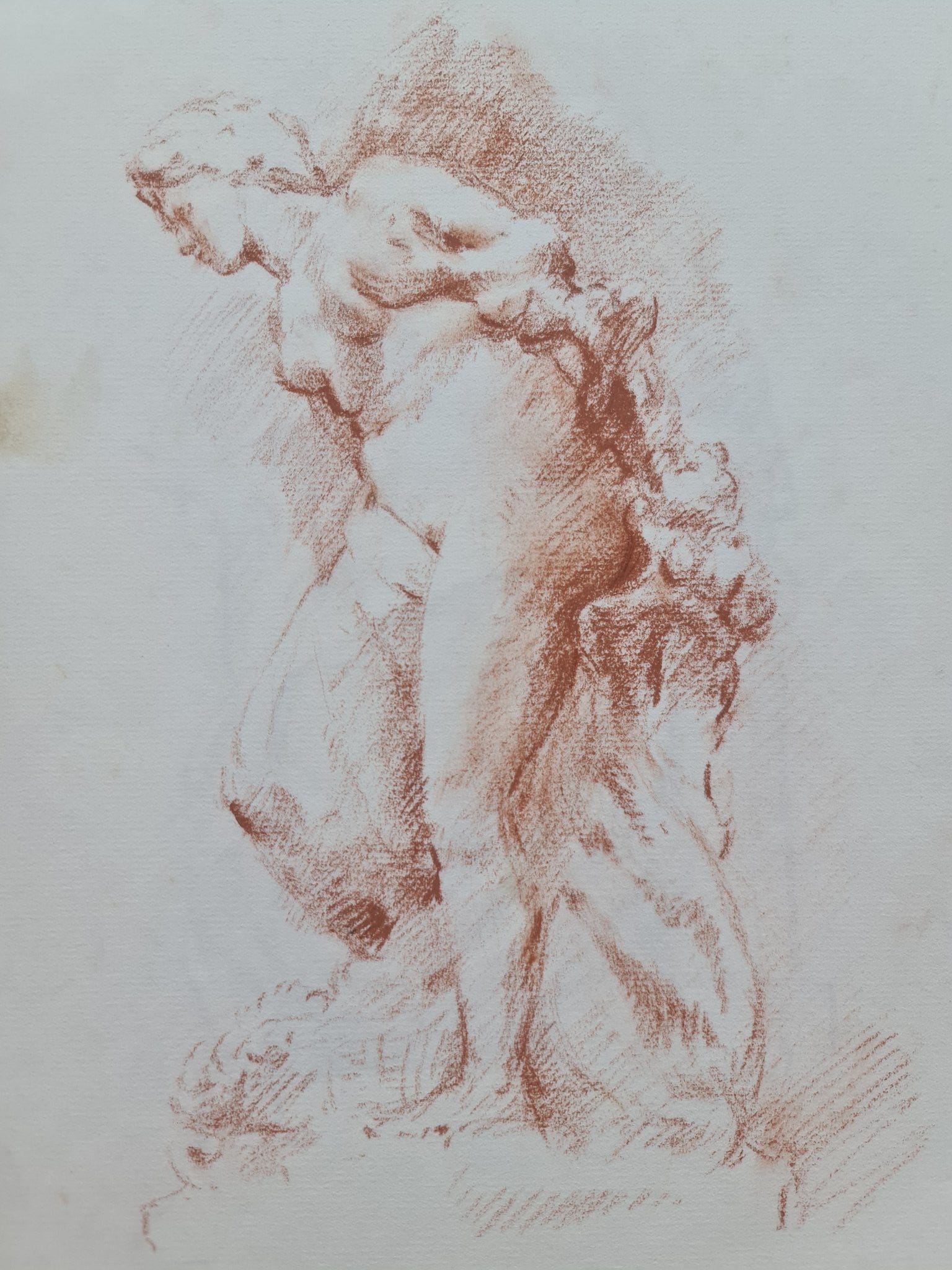
The director arranges the actors on the stage in such a way that, from the point of view of the audience, the scene tells its story. Scenography is a form of composition. The scenographer, the director, is not concerned with making the action understood, legible, comprehended, from the wings or from behind the stage, but from the audience's point of view. The action does not exist in itself; it must be presented within the proscenium, oriented towards the audience. If it is not presented well, if the space as seen by the audience is not used intelligently, if the relation of the drama and action to the space is not effective, expression is compromised.
An aspect of composition, and thus of drawing in its ‘fine art’ sense, is quantities of various sorts. For example, there is the relation of dark areas to light areas, not just their position, but simply their quantity. In the absence of a defined area, a page, a rhyme and rhythmic structure, this expressive aspect does not come into play. Without the proscenium, without the page as such, quantities have no meaning because there is no “quantity” without measure. The page is the measure: a quantity is a fraction of the page.
Directions (predominance of diagonal or vertical movements for example) are another quality which loses coherence in an unbounded situation or, more specifically, a drawing where the page, where the boundaries, where the underlying structure of the expression, is not taken into account, even if the draftsman is using — as is generally the case —a bounded ground. The page does not force the draftsman to take it into account, the draftsman must do so deliberately.
If we think, again, of the page as a poetic structure — like the x number of lines and y rhythmic structure and z rhyme scheme of such and such a poetic frame — if, I say, we conceive the shape (proportions) and size of the page as the fundamental form, we can begin to perceive how the natural forces or energies of those proportions and that size must in the first place be harnessed to our expressive intent. For example, the longest line, the greatest distance which can exist on a rectangular page, is that which runs from corner to corner across the page. No line, no movement, can be longer in that context. But we may dream of suggesting a vast movement, a ship crossing the seas, a great blow struck upon an anvil. Our very limited formal situation must be mobilized to the expression of something perhaps infinitely more expansive. Here again the page is our most basic expressive tool.
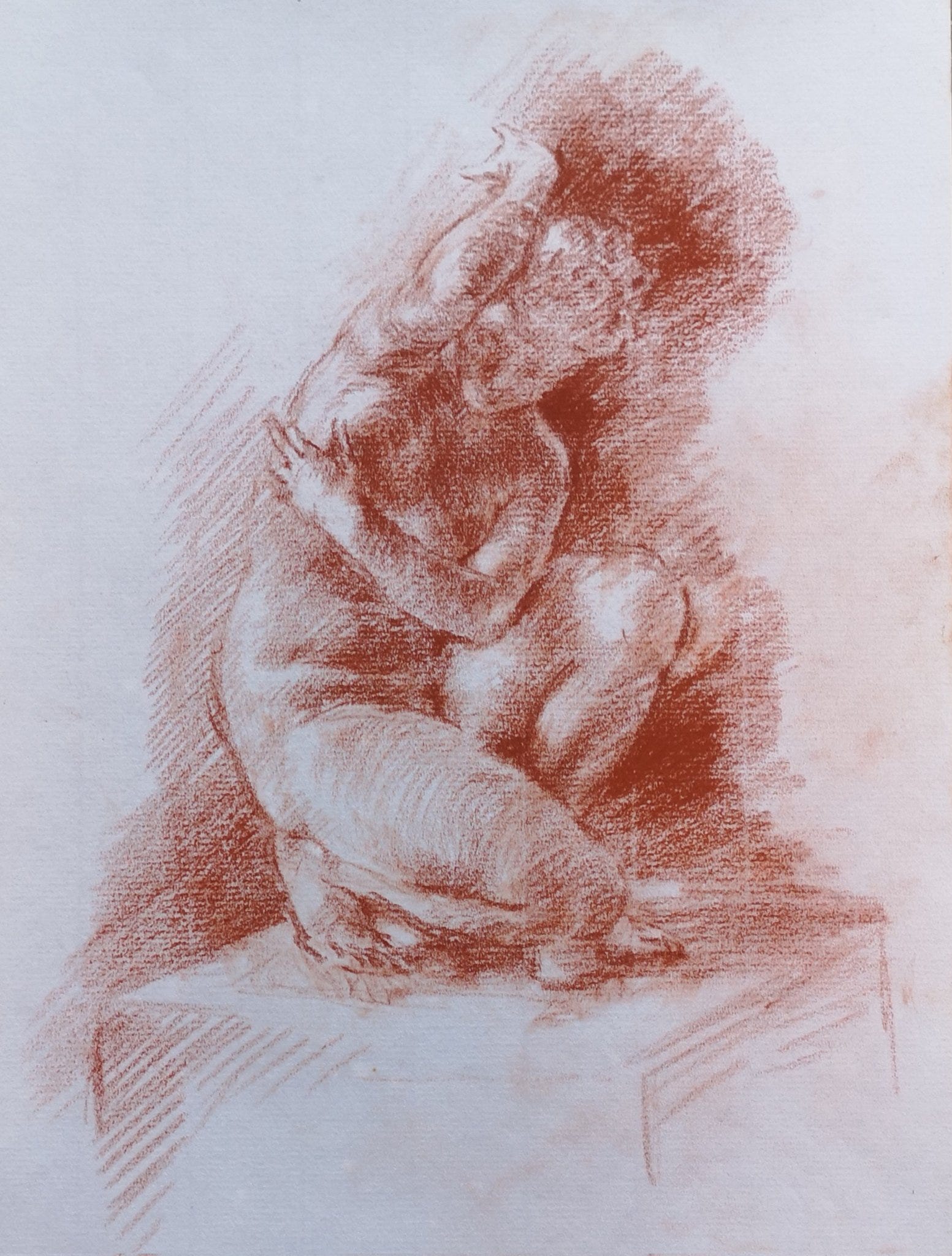
It may be objected that draftsmen such as Watteau often drew vignettes, for example heads here and there on the page. But it is not for beginners to uncomprehendingly imitate merely apparent aspects of the work of such a master. In the first place Watteau rarely does not decorate his pages, which he fills in various ways. He began his education, after all, as a decorator! Watteau reportedly composed his paintings by adding figures from his sketch books into his landscapes. But this does not tell the whole story; specifically it cannot explain the intimate processes and silent choices behind what appeared to an observer as a somewhat haphazard process of collage. Watteau's great follower, Boucher, apparently used a more synthetic process where figures seem to arise from pre-established geometrical structures. But again, we are not privy to those intimate processes and secret choices leading to a result the ultimate springs of which may remain hidden to our understanding. What can be said is that, in both cases the end result is ‘composition’ of the highest order, or as related to the page as any dramatic action could be to a proscenium.
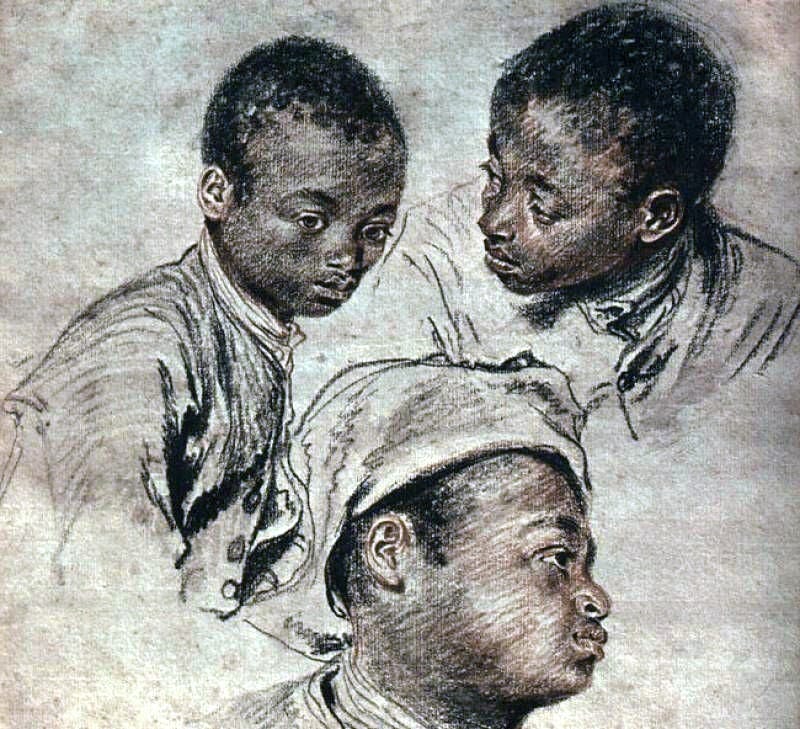
There are, of course, many other masters than Watteau and Boucher. They have been of special use to me personally but they are not the only masters who have fascinated me and from whom I have benefited. I mention this to emphasize that what I am struggling to teach has nothing to do with style. I regard style as an inevitable concomitant of our limitations or, more exactly, a symptom of our weakness. Inevitably anything done takes a specific form the exact nature of which is both the culmination of our efforts as well as the specific and limited trace we leave upon the infinite, the ultimate reality which we can never hope to encompass or express but only yearn for and invoke. The corollary of this thought: the inanity of preoccupation with historical styles, in the form of fear or longing, cannot be developed here, beyond saying that I regard such fears and longings with indulgent contempt. Our work as painters is to master our art, not to second guess Time and Destiny.
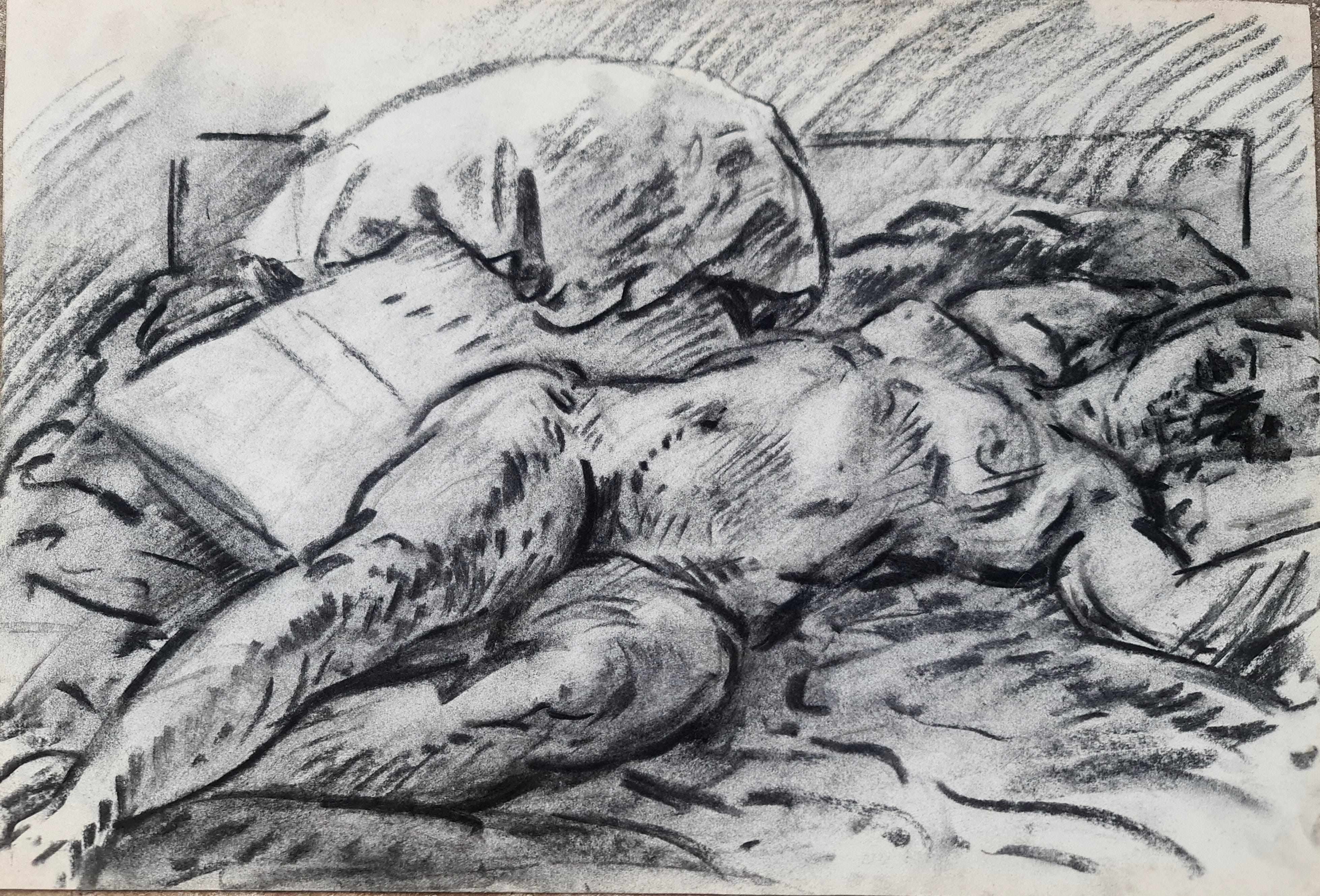
The earliest ‘schooling’ of future masters of painting began with the French academy in the 18th century. This development eventually contributed to the collapse of painting a century later but that story lies outside the present exposition. We may note, however, that Fragonard and Hubert Robert were subjected to nascent academic methods without ruin, though they also benefited from traditional formation which seems to have been how they were effectively trained.